Wine baskets have become a staple for celebrations, corporate gifts, and those moments when you want to say “cheers” in style. But why do they almost always come with a handful of fruit? The answer is a mix of history, flavor science, and a touch of visual flair. In this article we’ll unpack the reasons behind the fruity sidekick, explore the best fruit choices, and give you a step‑by‑step guide to creating your own irresistible wine basket.

The History of Wine and Fruit Pairing
Wine and fruit have been companions for centuries. From the vineyards of ancient Greece to the orchards of Renaissance Italy, the two have danced together in both kitchen and cellar.
Ancient Viticulture Practices
The Greeks were the first to notice that grapes and other fruits shared a symbiotic relationship. When they pressed grapes, the natural sugars in nearby berries or figs would enhance fermentation, yielding richer wines. It wasn’t just a culinary trick; it was a survival strategy—fruit helped preserve wine in a world without refrigeration.
The Rise of Modern Gift Baskets
Fast forward to the 20th century, and the concept of the “wine basket” was born in the United States. Gift baskets became a convenient way to showcase a wine’s elegance while adding a touch of natural sweetness. The fruit became an instant visual cue that the gift was both thoughtful and wholesome.
The Practical Reasons Behind the Fruit Choice
Beyond the romance of grapes and apples, there are solid, practical reasons why fruit is a staple in wine baskets.
Complementing Flavors
Fruit can mirror or contrast the wine’s profile. A crisp Sauvignon Blanc pairs beautifully with green apple, while a bold Cabernet Sauvignon finds a partner in ripe blackberry. The fruit’s sugars and acids help balance the wine’s tannins and acidity, making for a smoother tasting experience.
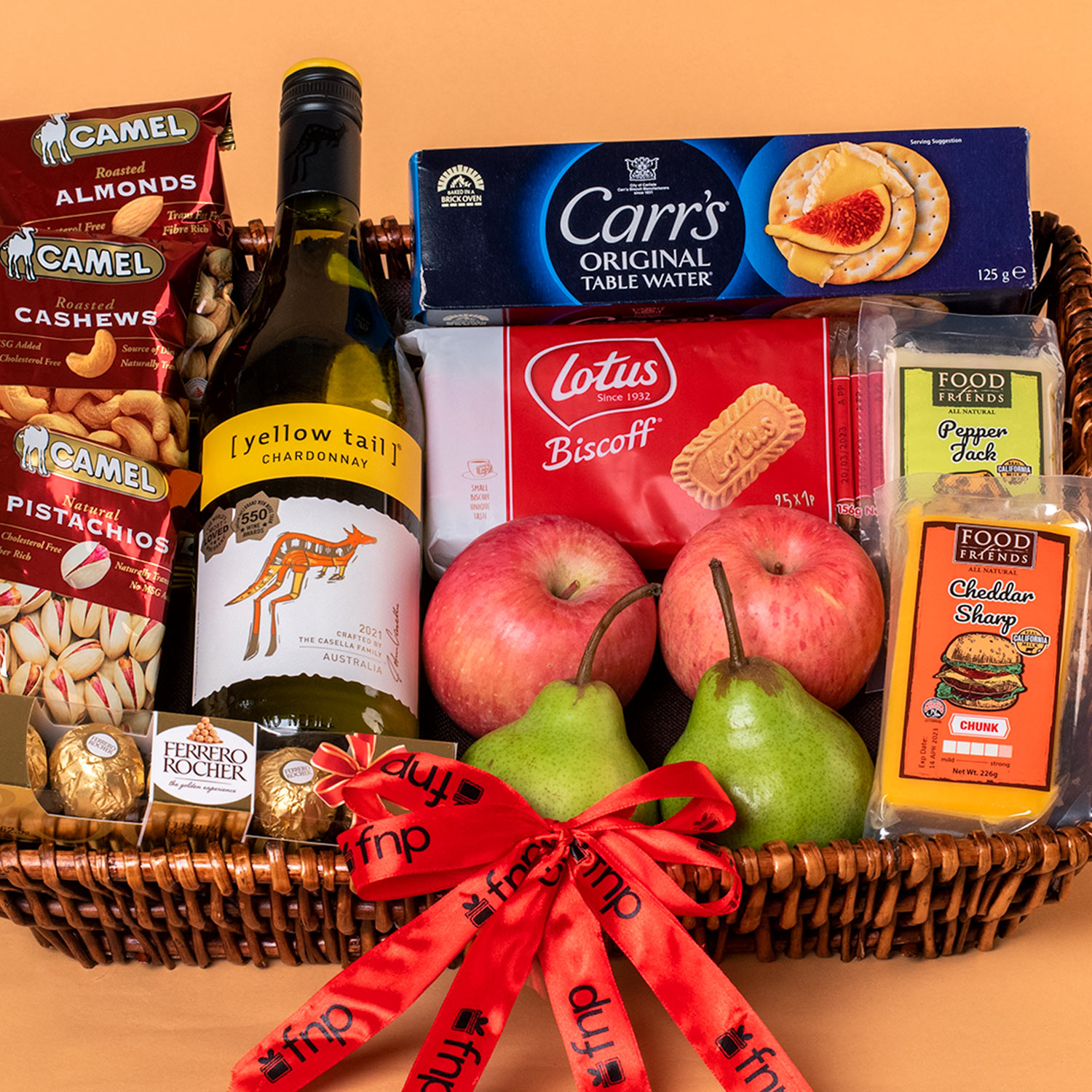
Aesthetic Appeal and Texture
A basket that looks like a miniature fruit market instantly catches the eye. The bright colors and varied textures create a visual “wow” factor. Think of it as a living bouquet—each fruit adds a gourmet hampers online layer of depth, making the basket feel more luxurious than a plain bottle alone.
Shelf Life and Storage
Fruit, especially citrus and stone fruits, can be stored at room temperature for days, keeping the basket fresh and fragrant. When the wine is opened, the fruit’s aroma can even enhance the bouquet of the wine, creating a multisensory experience.
> “A well‑chosen fruit is the secret handshake between the wine and the palate.” – Chef Marco Lupo
Common Fruit Selections and Their Pairings
Below is a quick reference guide to match fruit with wine. Pick one or mix a few for a balanced basket.
- Apples – Sauvignon Blanc, Riesling, or a light Pinot Noir Pears – Chardonnay, Chenin Blanc, or a dry Rosé Berries (strawberries, blueberries) – Rosé, Pinot Noir, or sparkling wine Citrus (oranges, grapefruits) – Prosecco, Champagne, or a dry Riesling Stone fruits (peaches, plums) – Merlot, Zinfandel, or a rich Malbec
How to Build Your Own Wine Basket
Ready to create a basket that will make anyone swoon? Follow these steps for a professional, yet personalized, gift.
Selecting the Right Wine
- Know the recipient’s taste – If they love bold reds, go for a Cabernet; for a light palate, a sparkling or white will do. Consider the occasion – A celebratory event calls for something more extravagant, like a vintage bottle. Check the price range – A mid‑tier bottle often balances quality and cost, keeping the basket budget‑friendly.
Choosing Fruit and Extras
- Seasonal fruit – Freshness matters. Choose fruit that’s in season for the best flavor and longevity. Add a twist – A small jar of local honey, a set of gourmet crackers, or a handwritten note can elevate the basket. Presentation items – Include a wine opener, a wine glass, or a small corkscrew for extra flair.
Presentation Tips
- Use a sturdy basket – A woven basket with a handle adds rustic charm. Layer thoughtfully – Place fruit at the base, then the wine, and top with extras. Add a decorative touch – A ribbon, a small flag, or a personalized tag can tie everything together. Keep it balanced – Avoid overloading the basket; a few well‑chosen items beat a cluttered pile.
A Few Lighthearted Anecdotes
I once gave a friend a wine basket that included a single plum. She stared at it, then at the bottle, and said, “I don’t know if I should eat the plum or drink the wine first.” It turned into a playful debate that lasted the whole evening—proof that a well‑curated fruit can spark conversation as much as a good glass.
The Perfect Gift Awaits
When you think about why do wine baskets include fruit, remember that it’s not just about taste; it’s about creating an experience. The fruit adds flavor, texture, and a splash of color that turns a simple bottle into a memorable gift. By selecting the right combination of wine and fruit, you’re offering more than a drink—you’re offering a story, a moment, and a touch of elegance.
So next time you’re assembling a wine basket, let the fruit be your guide. It’s the silent partner that brings harmony to the wine, and it’s the visual cue that says, “I’ve thought of you.” Cheers to that!